
Quick Answer / TL;DR
Programmatic Open Graph (OG) image generation is the process of automatically creating dynamic social preview images using APIs, reusable templates, and structured data instead of manually designing each visual.

Artificial intelligence is rapidly transforming how marketing content gets produced. AI agents can already write blog posts, summarize reports, generate campaign ideas, and orchestrate complex workflows. But one critical challenge still remains largely unsolved:
Modern marketing teams produce more visual content than ever before. Between Instagram, LinkedIn, TikTok, Facebook, Pinterest, YouTube, and display advertising, a single brand may need dozens — or even hundreds — of visual assets every week.

Email marketing has evolved far beyond simple personalization tags like “Hi John.” Modern consumers expect brands to understand their preferences, behaviors, location, language, and even purchase intent in real time.
AI marketing tools have evolved far beyond simple automation.
When marketers talk about backlinks, they usually frame it as an outreach problem.
Social media feels like running a race with no finish line. Blink, and there is a new trend, a new format, or another platform change to react to.
Research presentations can be powerful, but they can also become overwhelming very quickly. A presenter may have months of data, analysis, charts, findings, and recommendations to explain in only a few minutes.
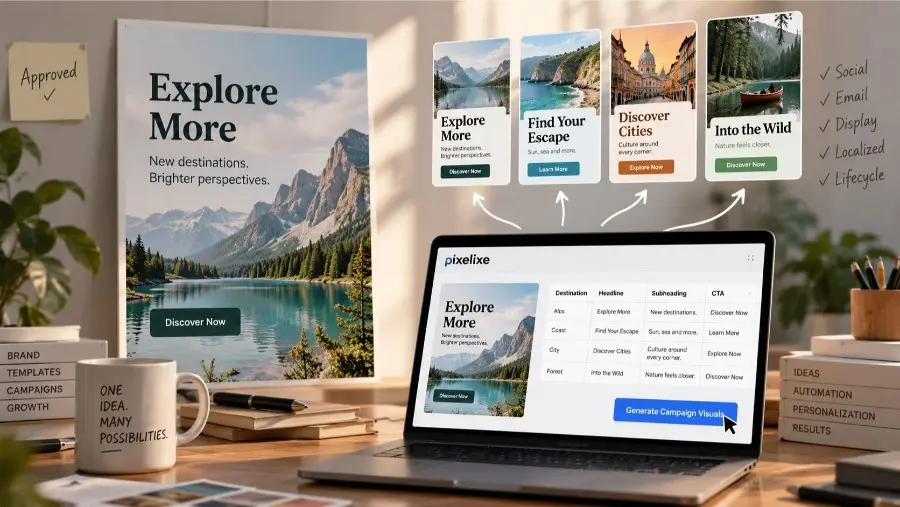
Marketing teams in 2026 are producing more content than ever before. Blog posts, branded visuals, social media graphics, lifecycle email creatives, campaign banners, localized ads, marketplace assets, and AI-assisted promotional content are now created at massive scale thanks to creative automation and image generation APIs.
In 2026, creative teams face a scaling problem: content demand is growing fast, but manual production workflows are not. Marketing teams now need visuals for ads, email campaigns, e-commerce catalogs, marketplaces, social media, localization, personalization, and lifecycle automation at a pace traditional design tools were never built to support.